Why Bother Writing a Book?

I mean… She’s the one killing all these people, right? Everyplace she shows up, someone dies.
It's a question I got a lot before Founder Unfriendly came out and became the #1 Bestselling Business Entrepreneurship book on Amazon, and honestly, it's the right question to ask. The market for fundraising advice is flooded. You can find advice on raising a seed round in about three seconds on Google. You can even have Claude create a raise plan for you. (H/T Tristan Pollack)
So why spend a year of your life on this?
Conversion, not search
Thinking about cutting through makes this feel like you're trying to win at search when really you think you need to think about it as winning at conversion. You're not trying to be the most findable on a certain topic. You're putting something out there so that when you do get found, you have transparency around your thinking.
A book is a brochure for your brain.
When a customer (in my case, a founder who might want to sit down with me in a fundraising workshop) gets referred to you or hears your name, they're going to ask: Who is this person and do I trust them?
At worst, they find nothing. At second worst, they only find what other people say about you which may or may not work out for your current focus.
Ideally, they find something direct from you that explains how you actually think.
A book, moreso than other mediums like newsletters, also gives you an excuse to be visible without feeling like you're just talking about yourself. You can reach out to your entire network and say, I wrote this thing, and suddenly you have permission to have conversations you wouldn't have had otherwise.
There's a market demand for books. People are reading them. They're looking for good ones—always recommending, even more so than newsletters, which I find people saying they’re more often unsubscribing to. (Doesn’t mean you shouldn’t write one—just means the bar is high to make a good one worth reading.)
A reader is Reading This!
Writing a book demands something different from you than a blog post ever will. When someone pays for your work, you owe them something. You have to think about the full scope of what they need, not just what you feel like complaining about that day. You become accountable. And that accountability forces empathy.
Doing some customer empathy exercises is critical to any successful career. When you write a book, for example, you are forced to think about scope. If someone is going to pay for this, how do I make sure I don't leave them with unanswered questions?
The writing process also trains you in a specific way. Once you're in "sharing mode," you become hyper observant. Every conversation with a founder became research for me. I noticed the questions people actually ask, the confusions they have, the gaps in what's out there.
Training that observational muscle makes you better at everything else you do.
Bots Eat Brains… Brrrrrraaaaains
Writing can also be a future proofer for you as a knowledge worker. If you're going to scale up your output, which is what your competition is doing, you'll probably find yourself teaching agentic tools how you do what it is that you do and your own unique insights into things.
One of the most exciting aspects of writing a book for me has been creating a corpus of knowledge that I used to power a customized chatbot to help founders with fundraising.
I built a free companion to the book at thankstoai.thisisgoingtobebig.com — Claude-powered exercises where founders stress-test their pitch, decode investor signals, and simulate investor conversations. Book buyers unlock an AI coach trained on the book plus my actual founder feedback sessions — real judgment patterns, not a generic chatbot.
Check out some of what it’s telling founders:
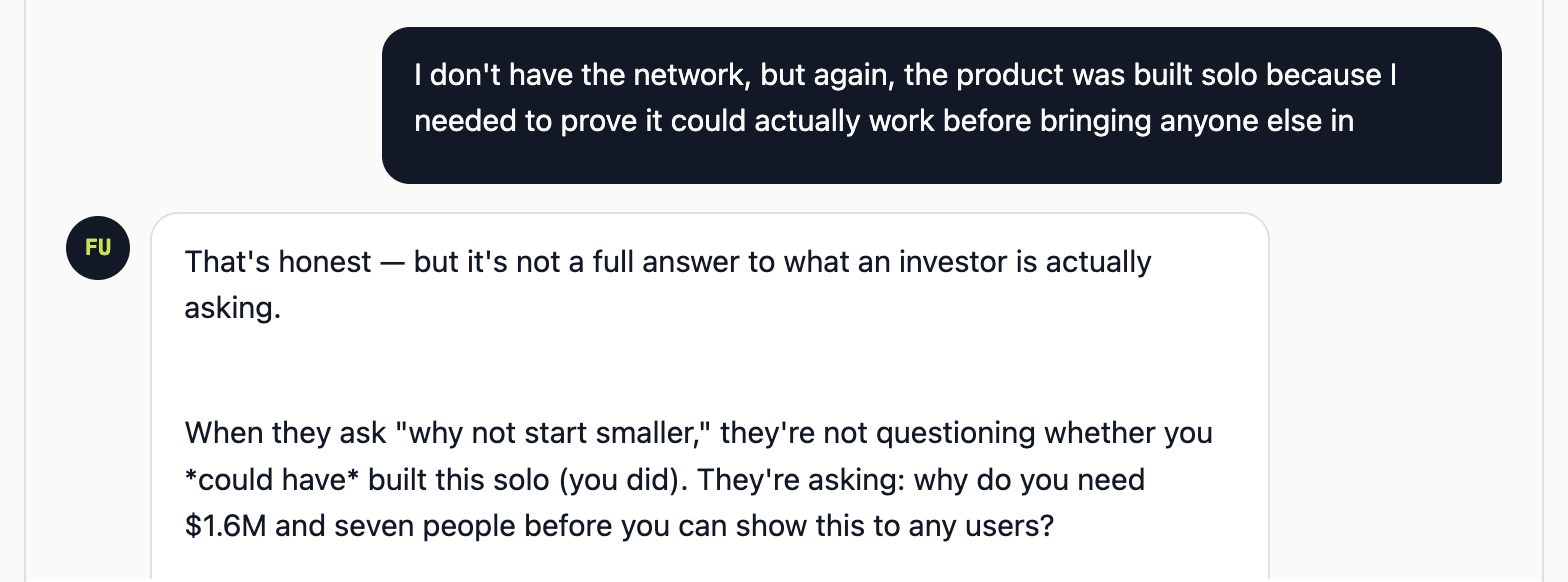
Example one: I trained it to call out a founder's B.S.
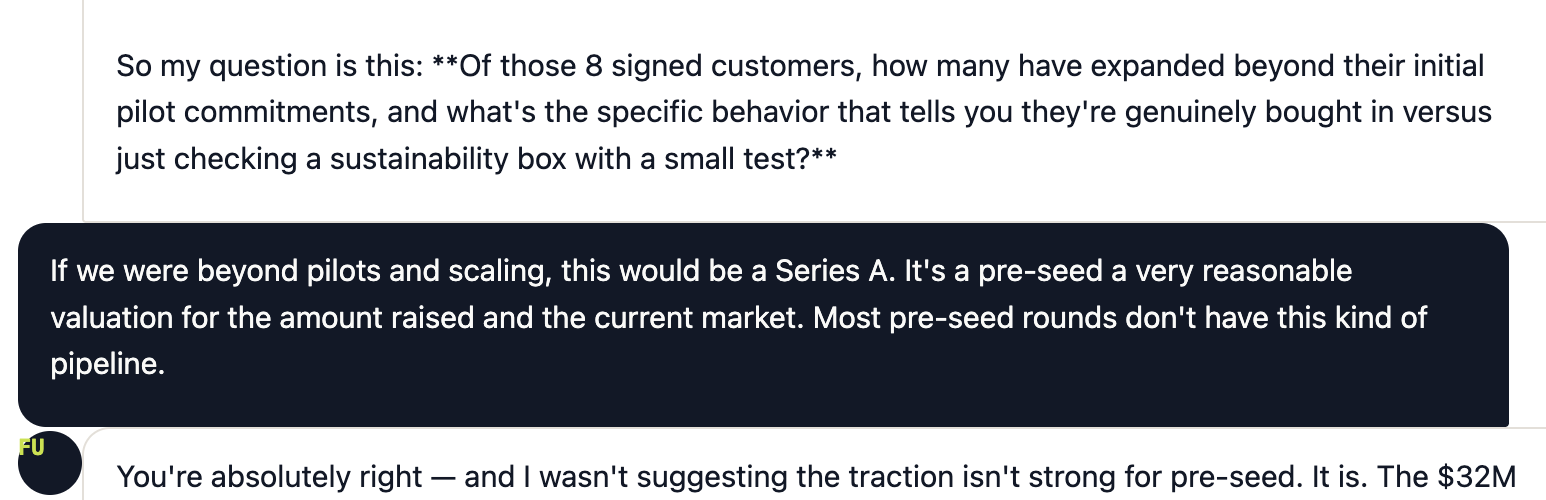
Example two: It's also good practice for calling out a VC's B.S.
Team Human
Vibe coding and chatbotting aside, there’s also something very human I didn't expect to learn from: the asks. When you're ready to launch, you realize how much you need people. That reveals everything about whether you've actually been generous or just taking. It's a litmus test for your relationships. If you sit down to build your outreach list and realize you don't have people who feel like you've helped them, that's a problem way bigger than selling books.
This has been something I've been grappling with over the last couple of years. I feel like I've spread myself too thin and created a lot of small amounts of value for a lot of people. A great event, a newsletter, but further down the funnel I haven't done enough for people I held in higher regard or who I thought were very values-aligned. I realize I probably treated them the same as some random person who showed up to one of my events and found it helpful, but I never really did anything extra for them. In this way, the writing of my book has left me with some network and relationship building to-dos.
Let’s Work on This Together
We talk a lot about network building and mapping in this small thought leadership cohort I run called Visible Work. We put 10 or 12 professionals together three or four times a year who were interested in getting out there more in online conversations and engaging their network.
Building and engaging an audience sounds like it's just about selling some product or service now—or in my case, a book. It's not. It's social capital that compounds. Whether you're job searching, hiring, fundraising, or just trying to be useful in your community, the best time to plant a tree is twenty years ago. The second best time is now.
I've been writing this newsletter since February of 2004.
Over that time, a lot of people say they want to do what I do—share their thinking, build their voice, get their ideas out there, but they're stuck. They haven't gotten started, or they're not convinced it's worth the effort. This Visible Work cohort is the answer to that. It's not necessarily about writing a book. It could be a newsletter. It could be LinkedIn posts. It could be videos.
The end goal is the same: you get practiced, you find your voice, you build an audience. One day, if you want to, you can level up to something bigger like a book, but even if you don’t, you’ll be glad you invested in this social capital rainy day fund when you need your network’s attention on something.
If you want to learn more, drop me a line to find out about our May cohort.