How a Routine Reference Check Got Me Booked on a Podcast (Or, Not All Thought Leadership is an Ego Trip)
A few months back I got a backchannel reference call about a founder I'd backed. His company hadn't returned anything to investors when it got sold, and I hadn't really heard from him after the sale.
The easy thing — the thing most VCs do — is to say "I haven't heard from him, I don't really know about the new company" and move on.
Instead I called the founder. I figured he probably felt too awkward to tell me about the new thing, and I was right.
We had the conversation that should have happened a year earlier. It was awkward for him — the natural thing after losing someone's money is to disappear, and he had. It was frustrating for me, because the relationship had quietly withered and I'd been letting it. Somewhere in the middle of the call we said the thing out loud: nobody talks about this. There's no template for the post-loss check-in. Everyone's just supposed to figure it out, and most people don't.
We both walked away grateful for having had the conversation. I wound up saying nice things about him for the reference.
That could have been it. Most of these moments end there. But here's where I think I work differently — and it's the thing I'm trying to pass on through the Visible Work cohorts I run:
I wrote about it later that day. (What's Next After You Lose Someone's Money)
It remains one of my most engaged posts in the last year. Lots of people reached out to say thanks for naming something they'd been quietly dealing with and didn't have a good answer to.
It wasn't a contrarian take. It wasn't a framework. It wasn't a term I coined that's about to become the insight of the year. I just shed some light on a thing nobody was saying out loud that lots of people were feeling. I wasn't trying to grow followers. I was trying to be helpful.
Being helpful wound up helping me, too.
You see, I had a book lunch coming up for Founder Unfriendly and I was actively looking for podcasts to join—especially ones that weren’t just successporn about rocket ship revenue growth unattainable to 99% of founders.
A couple of days after the post went up, an email landed:
Charlie,
I host a podcast all about how to design challenging conversations — so that they're more effective and impactful. This seems like a really worthwhile topic for exploration in a live episode — if you're up for recording a conversation in 2026, let me know?
Best,Daniel
That's Daniel Stillman, who runs The Conversation Factory. I said yes immediately — partly because his email was specific in the right way (he'd actually read the post, named exactly what he wanted to talk about), and partly because I was trying to get on more podcasts for the book launch.
We recorded a few weeks later:
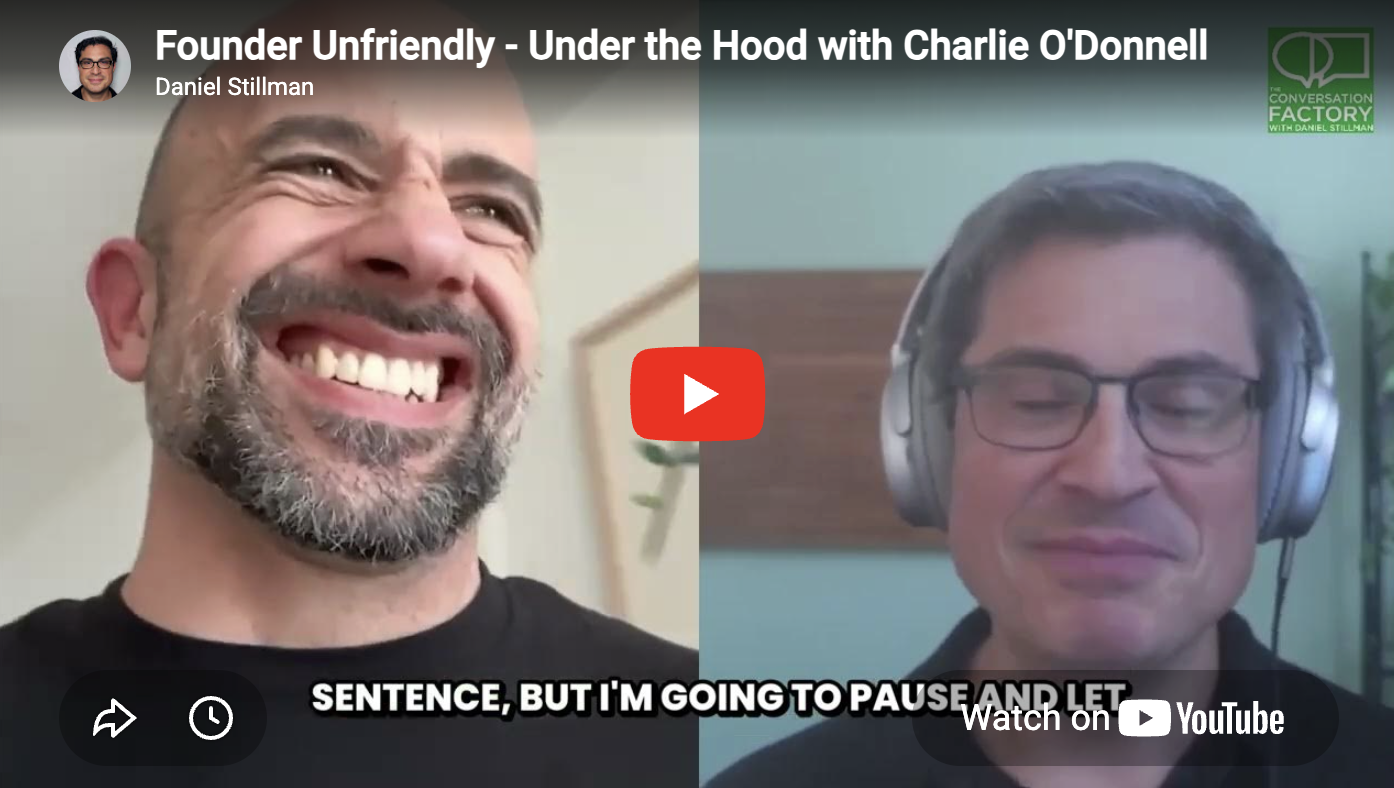
That whole sequence — the reference call, the follow-up with the founder, the post, Daniel's email, the recording — is what thought leadership should actually look like: Full of thoughtful conversations that inspire you to find ways to help others.
That’s not how most people describe social media channels these days, but it doesn’t have to be.
You don’t have to be a linkbaiter just to get follows.

Consider that the search for work is the search for utility:
“Will someone pay me to help others in the way that I like helping?”
By modeling the ways that you want to be helpful ahead of the work, you increase the chance of attracting interesting work opportunities. That’s why I’ve held onto this small Visible Work cohort that I started working on a few years ago. Helping someone find the way they want to display their helpfulness and scale their generosity, in ways that leads to more meaningful work, is incredibly rewarding.
We’re running the next Visible Work cohort starting May 18th. It will be about ten of us—people who want to be more visible at work without turning into LinkedIn personalities. You can sign up here.
If you can't think of what to write, the problem usually isn't the writing. It's that you're letting too many interesting conversations pass — or not having enough of them in the first place. You're finding it hard to get inspired to share, because you're not getting inspired enough by others, or you lack the mechanisms to lower the friction to share them when you do.
The good news is the fix is the most enjoyable thing on your list. You don't have to grind out content. You have to call the founder whose app you love. Email back the person who reached out for advice. Have the dinner that's been kicked around the calendar for three months.
The conversations are the work. The writing is just what falls out when you pay attention and build the scaffolding to make sure they don’t get lost.