The Bike Arguments Aren’t About Bikes
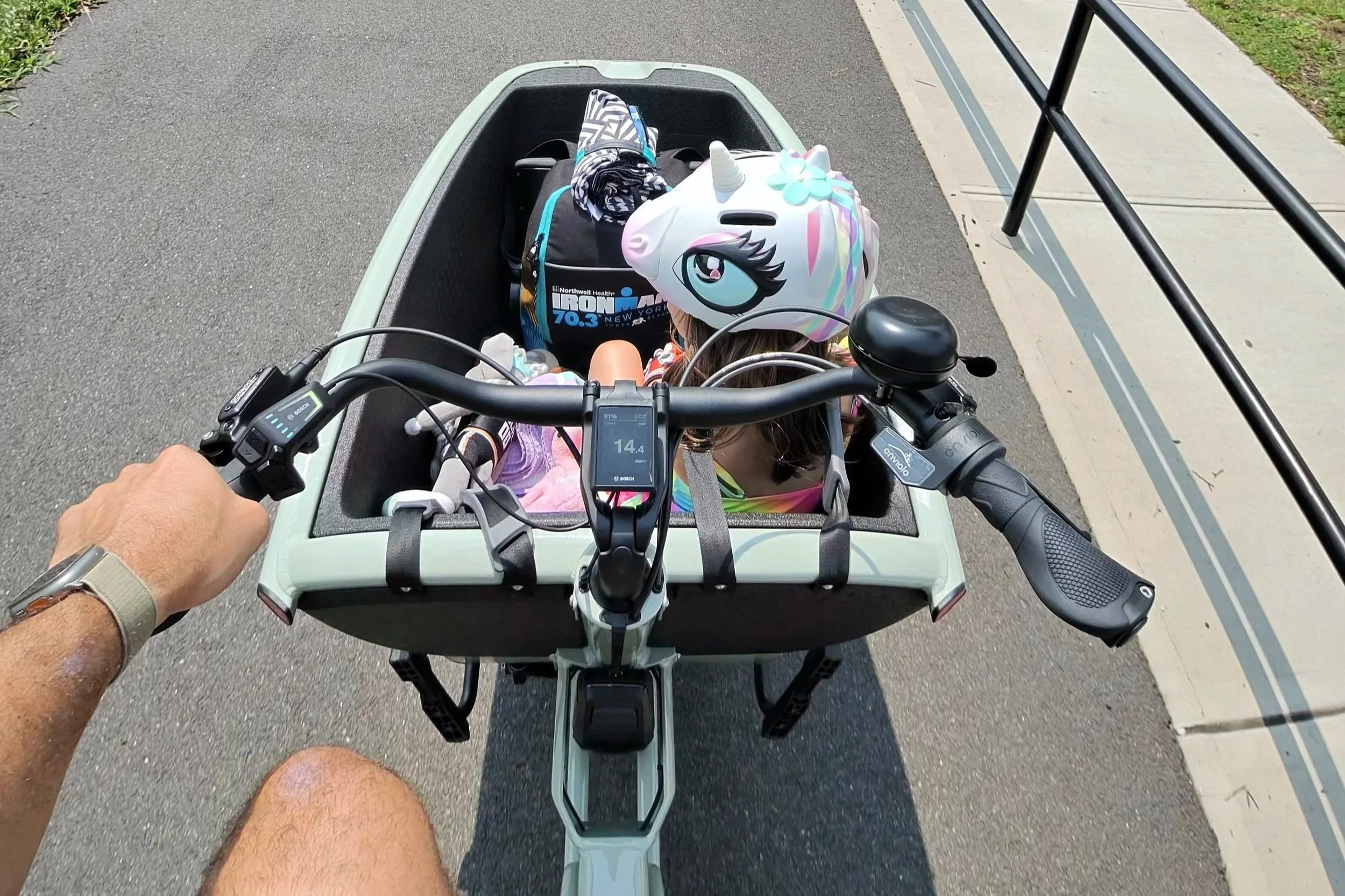
Headed to Coney Island to see the penguins!
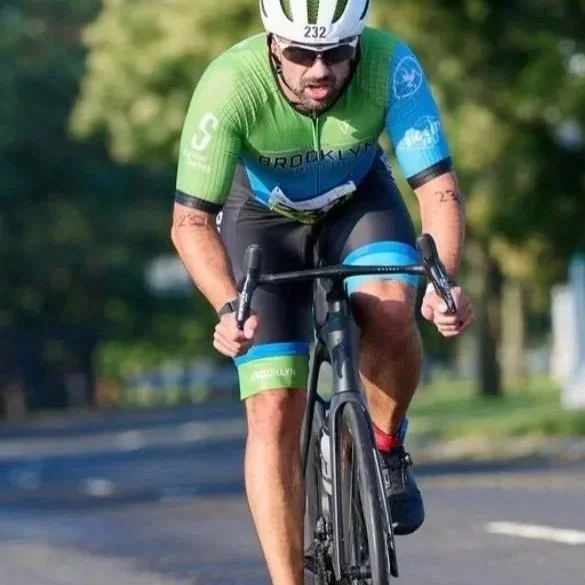
Teardrop helmet not pictured.
I'm a cyclist first and foremost.
I compete in triathlons on a high-end road bike, in full spandex and a teardrop helmet. I've also recently become a cargo bike convert, driving around an Urban Arrow that is basically the Yukon Denali SUV of cargo bikes.
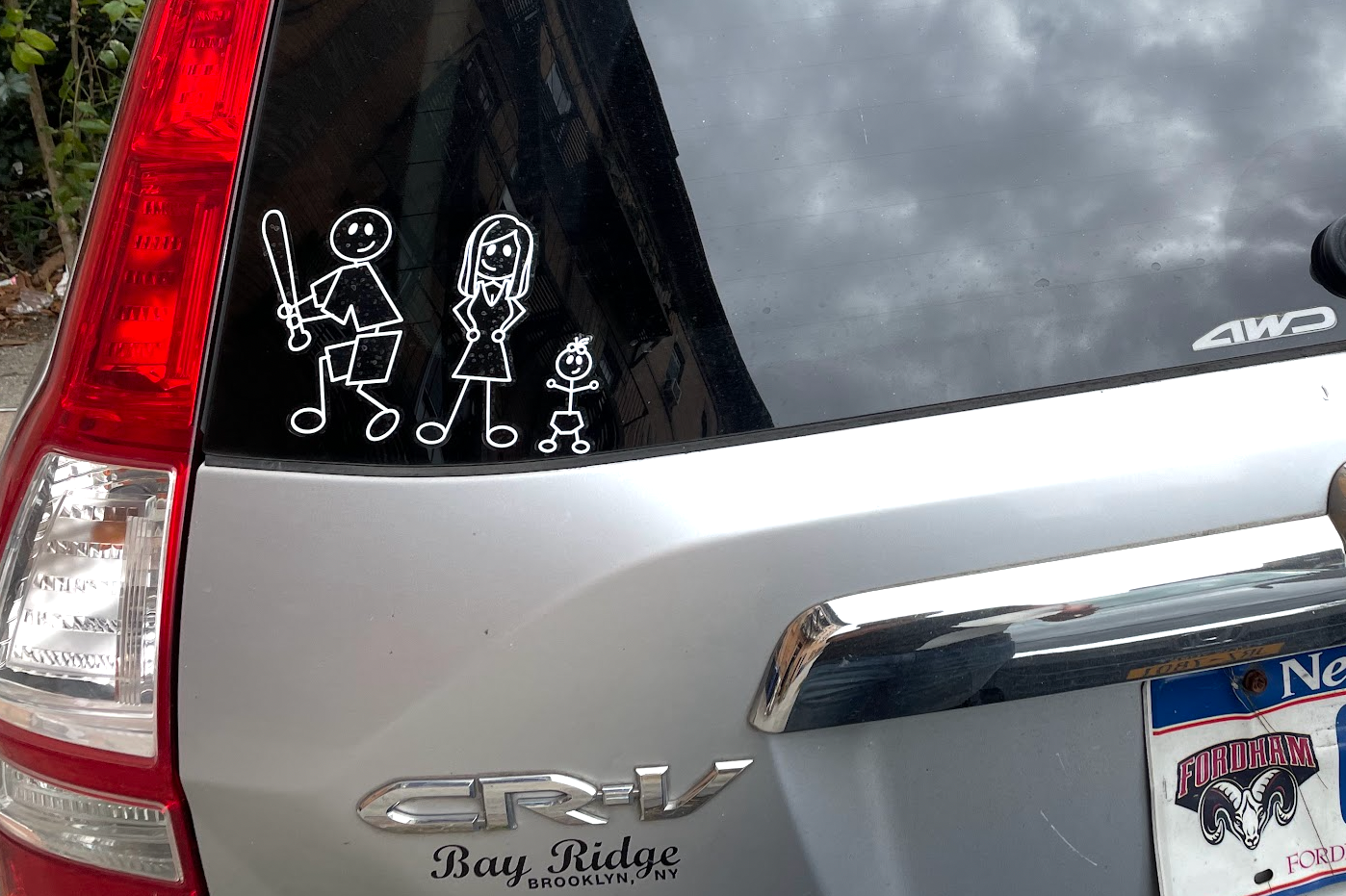
My other bike is a 2009 Honda CR-V that I inherited when my mom passed away. It's worth less than either of the other two bikes, but it'll probably last me 30 more years because it only has 60,000 miles on it.
I grew up loving both bikes and cars, in a family and neighborhood that mostly loved their cars. Being allowed to bike off our street meant exponential growth in my freedom. I could bike 2.5 hours in any direction, so long as I could make the return trip before dinner, and end up in parts of Brooklyn I'm still not sure how I got back from.
I also loved cars growing up. Getting my learner's permit and my license as early as I could meant driving 15 blocks to the Vegas Diner with my friends on a Saturday night for burgers, fries, and banana splits. This was outer-borough car culture. It sounds like the '50s, but people in the Bronx, Brooklyn, Queens, and Staten Island take their cars very seriously.
[Monkeys Spinning Monkeys plays]
Car freedom can mean an escape from the house as a teenager, but it can also mean a lifeline for an aging adult. My grandmother drove until she was 96. Her car was her freedom, and she kept it partly because she said Access-A-Ride was unreliable. My mom had COPD and used to put a portable oxygen kit in her car to drive out to Staten Island to see her mother.
Without that car, she would have been shut in.
Later I worked for the General Motors pension fund, where a car was part of the compensation. I had a Pontiac Grand Prix GTP and loved it. It had a heads up display to give me my speed and the radio station and I don't know why that's not a feature in every car.
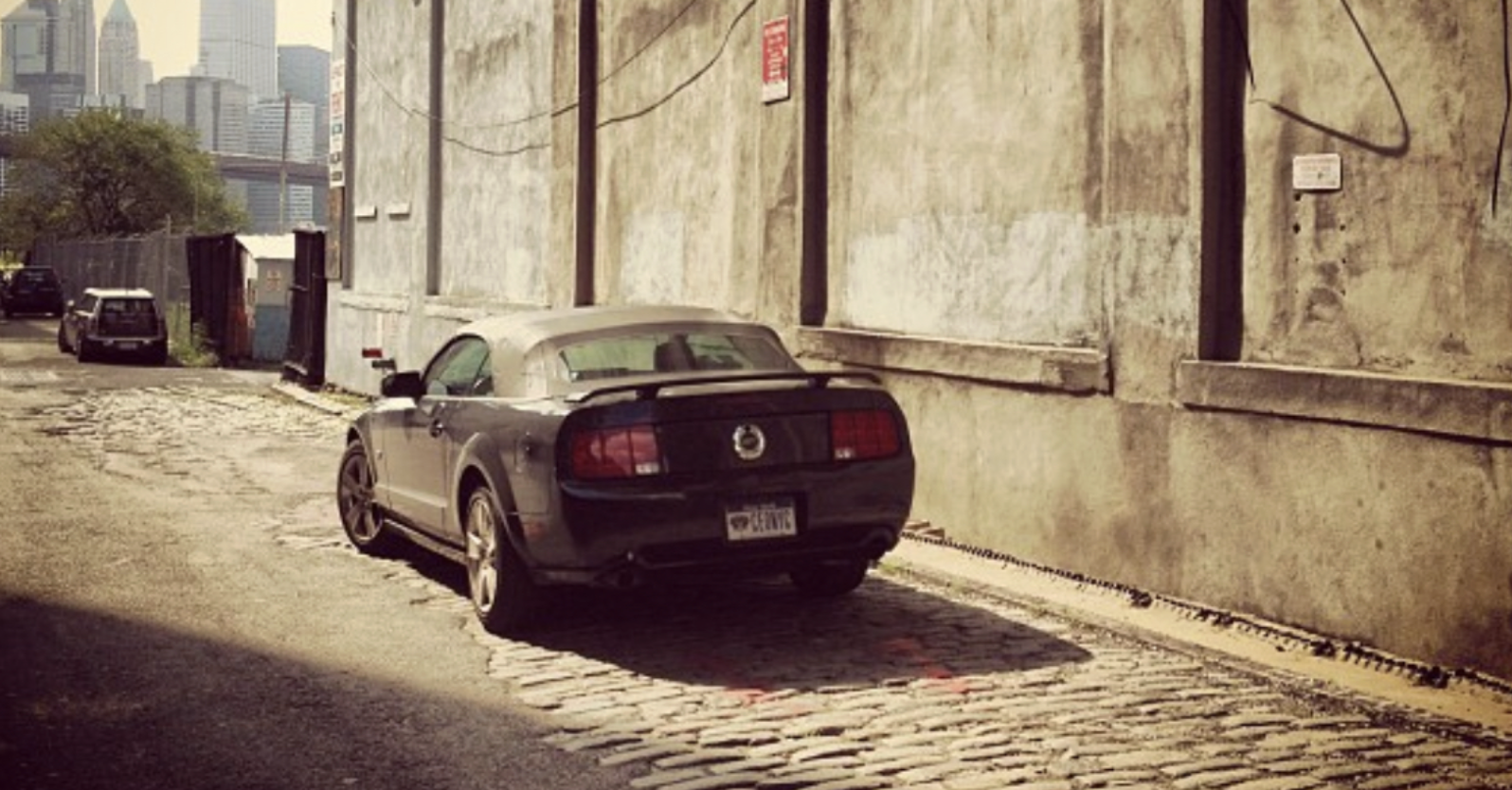
I miss this car!
When I left that job, the redesigned 2005 Mustang had just come out. I moved to Bay Ridge, into a building with a garage, and bought the convertible model. I kept it for 14 years and I was completely in love with it.
These days I drive the CR-V, and I don't love driving it the way I loved that Mustang.
So when someone tells me a car is freedom, I dorn't think they're crazy. I bring all this up because almost every fight in New York about bikes, bike lanes, and e-bikes is actually a fight about something else. I've loved both, and I can tell you that neither side is actually talking to the other.
Take Bedford Avenue in Williamsburg. In 2009 the city sandblasted 14 blocks of bike lane off Bedford after complaints from the local Hasidic community. Activists repainted it themselves overnight, and the city painted over their version. The objection kept changing. First it was cyclists in revealing outfits riding through the neighborhood. On Kent Avenue it was lost parking, hurt businesses, and cyclists not stopping for school buses. When the city reconfigured Kent, the complaint became trucks being diverted onto residential streets.
What most people outside that community don't know is that many Hasidic families in Williamsburg are quite poor. The families are very large and the resources are thin, so gentrification hits them the same way it hits any poor family. The newcomers driving up the rent arrive on bikes, so the bike becomes the thing you can point at. Bloomberg traded that lane away after winning his third term, and Adams made his own deal on the same street years later.
The politicians are the ones who treated it as a bargaining chip instead of speaking directly to the anxiety that change brings those who are the least resourced to defend against it.
Then there's Bradley Tusk.
A 15-year-old girl was just killed at 14th Street and First Avenue when a truck turned into the Citi Bike she was sharing with a friend. Tusk's response was to blame the mayor for stopping a biometric age verification system, calling it devotion to far-left ideology. The rider operating the bike was 16, old enough to rent it. Age verification would not have changed anything that happened at that intersection.
Tusk is a venture capitalist and a lobbyist for tech. He ran Uber's fight against the city, and Zohran Mamdani went on a hunger strike with taxi drivers over medallion debt. This was never a Citi Bike argument.
Most of this arguments aren't about the bikes.
When you see everything through the lens of how tech can keep everybody safe, surveillance looks like the answer. A truck side guard or a redesigned turn has no cap table.
E-bikes are the same story. People say e-bikes are dangerous, and a lot of what you see from delivery riders really is aggressive. They cut corners and go the wrong way. Not everybody does, but enough do.
Consider who is riding. Many are hourly workers commuting in from transportation deserts, because an e-bike is cheap and fast, and saving 30 minutes on a trip matters when you're paid by the hour and working long days. Delivery workers are paid by the delivery. If keeping your family's head above water depended on how many deliveries you could make, you'd ride like they do too.
The app companies designed that incentive system, and they make a lot of money off it. They could change rider behavior very quickly by changing how riders get paid. We're not talking about surveilling them. We're talking about incentives. You can give a driver a bonus point per trip for safe riding without keeping a record of the whereabouts of a highly undocumented community.
Yet, nobody's yelling at the app companies. They're yelling at the guy on the bike.
The Council spent ten hours on this September 30 — three committees, twenty-one bills, a record by the Speaker's own guess. NYPD's Deputy Commissioner admitted his officers can't look at an e-bike and tell whether it's legal. They've seized 10,080 mopeds and 1,206 e-bikes this year and never checked afterward. He also said the department opposes the bill that would give them a device to measure it. Commissioner Tisch skipped the hearing entirely.
Brooklyn Borough President Antonio Reynoso made the point at the hearing better than I can. Of the twenty-one bills, none were about dangerous driving and two were about infrastructure.
More than 140 people have been killed in car crashes in this city this year. Not one of them was killed by someone on an e-bike. One was killed by someone on an e-scooter. A cyclist killed a pedestrian in Central Park last week, the first time a person on a pedal bike has killed someone here since 2014. Twenty cyclists have been killed, most of them riding e-bikes, almost all by drivers.
Street design fights work the same way.
Mitchell's on Vanderbilt led the community fight against Open Streets. Their weekend crowd had been churchgoers driving in from other neighborhoods, and their elderly customers couldn't walk far if they couldn't park nearby. That was a real loss, and I'm not going to pretend it wasn't.
On the same street, though, other restaurants set tables halfway across the road and did far more business than before. The neighborhood had changed, and Mitchell's hadn't done much outreach to the people who lived there now.
Open Streets didn't create that problem. It just made it impossible to ignore.
There are two ends of the spectrum that hate this kind of change. On one end are wealthy, entrenched people on the Upper West and Upper East Sides. They want quiet streets without bikes buzzing around, and they want to pull the car out of the garage and head to the Hamptons.
Life has treated them well, so why change it.
On the other end are poorer people in transportation deserts who rely on a car to get to jobs the subway doesn't serve well. They work in schools, government offices, light manufacturing, trades, and deliveries. The subway is built to go in and out of Midtown and the Financial District, where the higher-paying jobs are. Living near good transit costs more, so bike infrastructure looks like one more thing being done to them. Government-supported change has usually left them out, so they assume they're going to get screwed. It often comes as part of a package with faster buses, which help them more than anyone.
Those two groups oppose the same bike lane for reasons that have nothing to do with each other. That's why it's so hard to make anybody happy. The arguments get muddled because everybody has a different reason to dislike the change.
Very few people in any of these fights are experts. There's a small number of traffic engineers who actually understand how people move through a city, and they're almost never the ones being quoted.
Everyone else argues from anecdote and tragedy.
In 1990, 701 people died in traffic in New York City. In 2025 it was 205, the fewest since the city started counting in 1910. The big difference between what our streets looked like in 1990 and what they look like now is a whole network of street design built to slow cars down, give space to other kinds of vehicles, cut down on speeding, and make pedestrians a lot more visible.
People call that the war on cars. I'd call it the fight to save pedestrians, or just the fight to save lives, because it seems to be winning.
Even with that progress, 205 deaths is more than two-thirds of the 309 murders the city recorded last year. Traffic deaths still get treated as accidents, just part of living here, while murders get treated as a crisis.
The last people to give up their cars are the ones who actually need them, like my grandmother, my mom, the home health aide in eastern Queens. Those people should be the loudest supporters of making car ownership harder for the rest of us who don't need a car. Every car that comes off the road makes the street better for the people who must drive.
The hard thing about government is that, ideally, it's trying to make the best decisions for the largest number of people. Sometimes that doesn't include you. Other times, your problem getting to a medical appointment isn't the bike lane at all. It's that Access-A-Ride isn't reliable enough, or there aren't enough good doctors in your neighborhood, because a for-profit healthcare system doesn't find you profitable enough to serve.
The bike lane is the thing you can see, so it absorbs the anger that belongs to everything you can't see. I'd just ask people on both sides to think hard about why they want what they want, and whether they've listened to anyone who actually knows how streets work.